
Lower costs. Support cash flow.
Use solar power during business hours to reduce purchased electricity. The net benefit depends on your usage, system cost, financing and ongoing operating costs.
Put your roof to work with commercial solar PV and solar hot water. Based in the South Island and Wellington, Consol designs systems around your premises, energy use and long-term business plans.
Commercial solar can support your financial goals, greener operations and long-term energy strategy — with a system designed around your business.
Use solar power during business hours to reduce purchased electricity. The net benefit depends on your usage, system cost, financing and ongoing operating costs.
Business-owned solar equipment used in your business qualifies for depreciation deductions, allowing its cost to be recognised over time as part of your business’s tax planning.
Generate renewable electricity on site and make solar part of your wider sustainability programme. Track generation and use reliable data to assess any emissions benefits.
Generating some of your own electricity reduces the amount you need to buy at retail rates. That can give your business more control over part of its future energy costs.
Show customers, staff and business partners a practical investment in renewable energy. Share measured results to support your sustainability story and supplier conversations.
Plan solar alongside EV charging, electric equipment or battery storage. A system designed around future demand can support your business as its energy needs change.
Explore solar installations for industry, engineering and education across the South Island and Wellington.
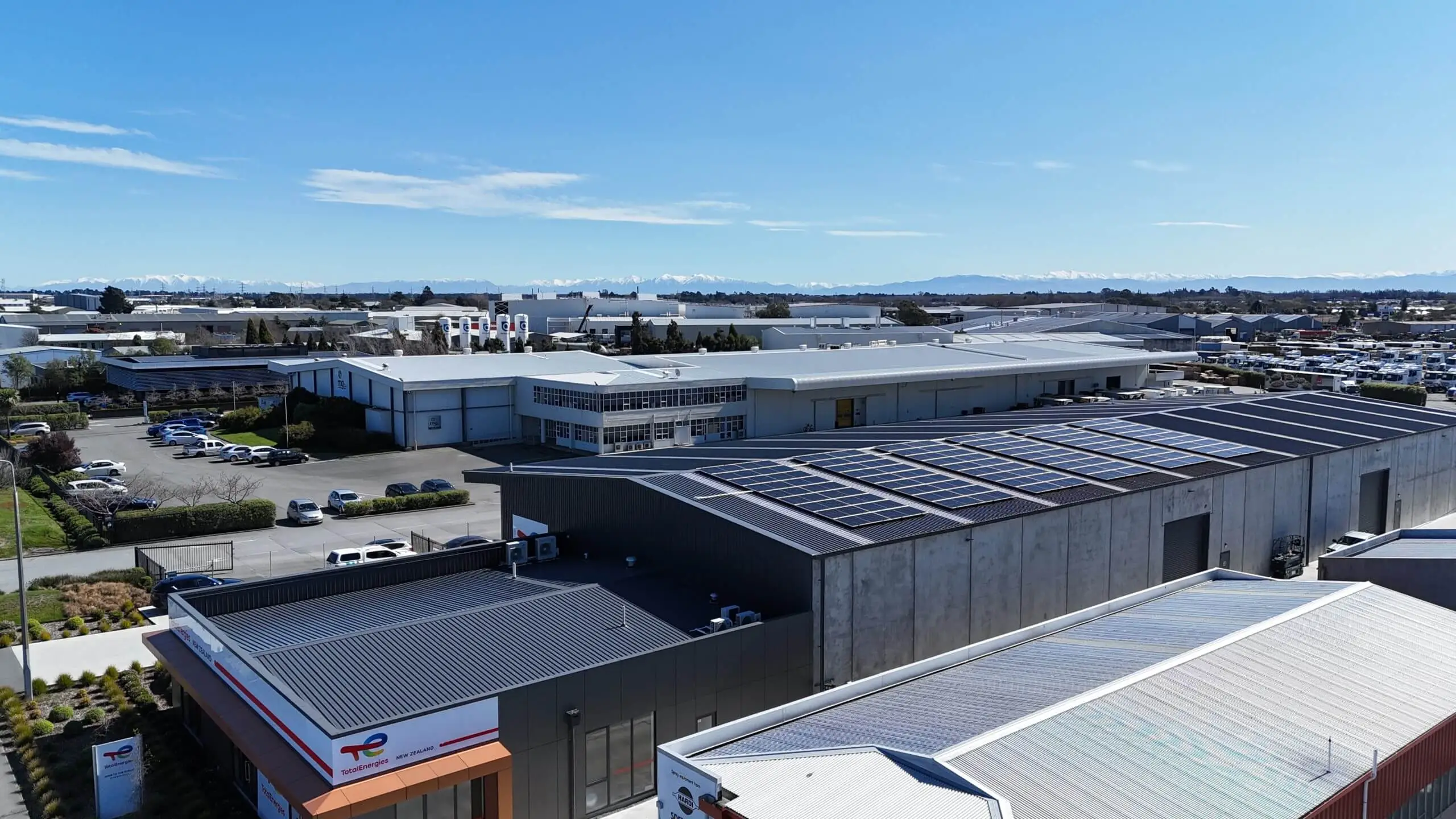

63 kW commercial solar installation · Christchurch
This system features 108 LONGi 585 W panels paired with an entelarenergy 50 kW inverter, designed to generate around 72,000 kWh of electricity annually.
By generating more power on site, TotalEnergies can reduce demand on the grid and exposure to rising electricity prices. The installation supports long-term savings on operating expenses while contributing to cleaner, more sustainable operations.
Discuss a project for your business →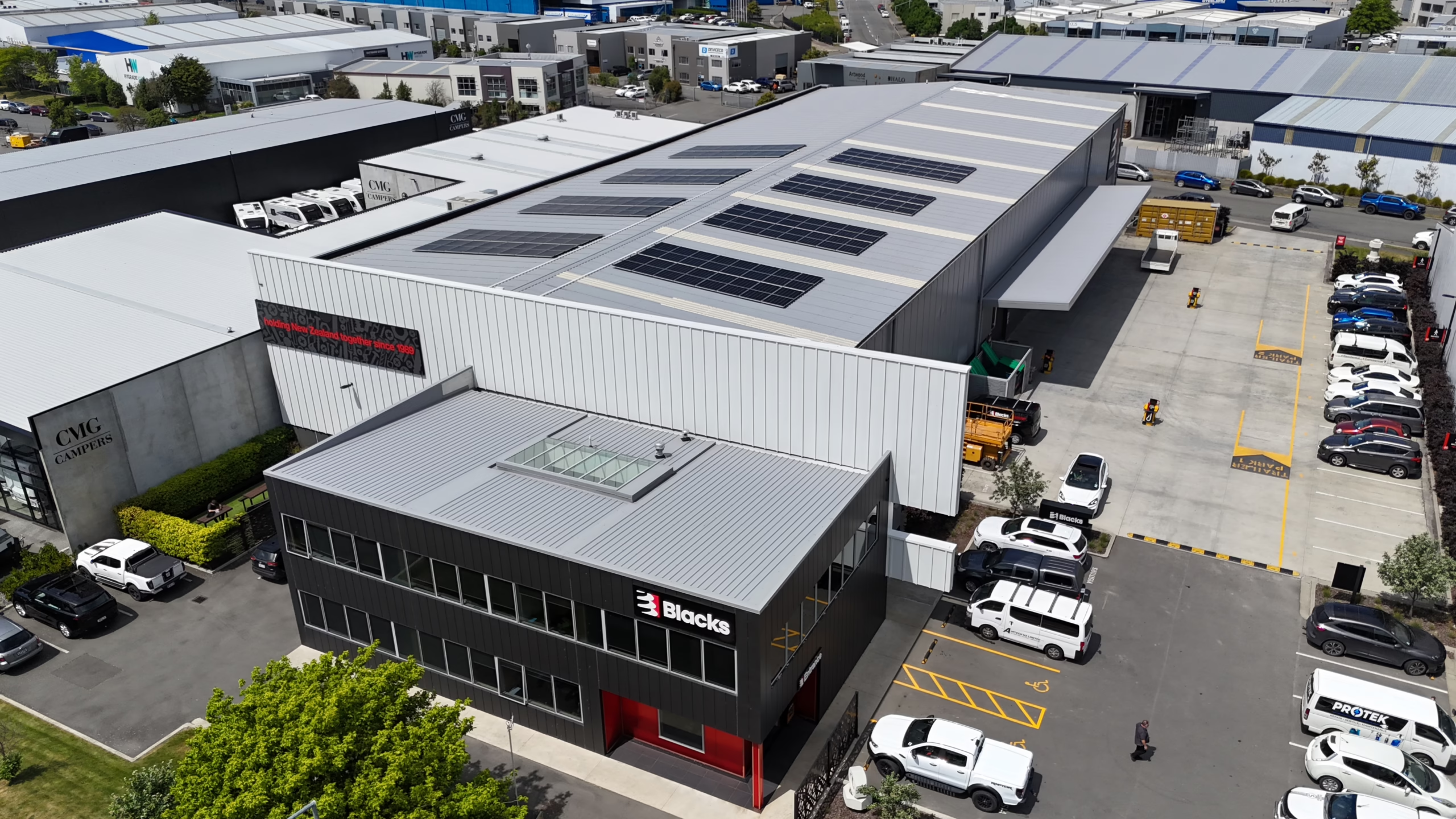

84 kW commercial solar installation · Christchurch
Completed in October 2026, this installation features 128 LONGi 650 W panels paired with an Entelar inverter, with estimated annual generation of 100,000 kWh (100 MWh).
Blacks Fasteners invested in solar to reduce the operating costs of heating, lighting, EV charging and forklift charging. Generating electricity on site helps support these everyday business needs while reducing reliance on purchased grid power.
Discuss a project for your business →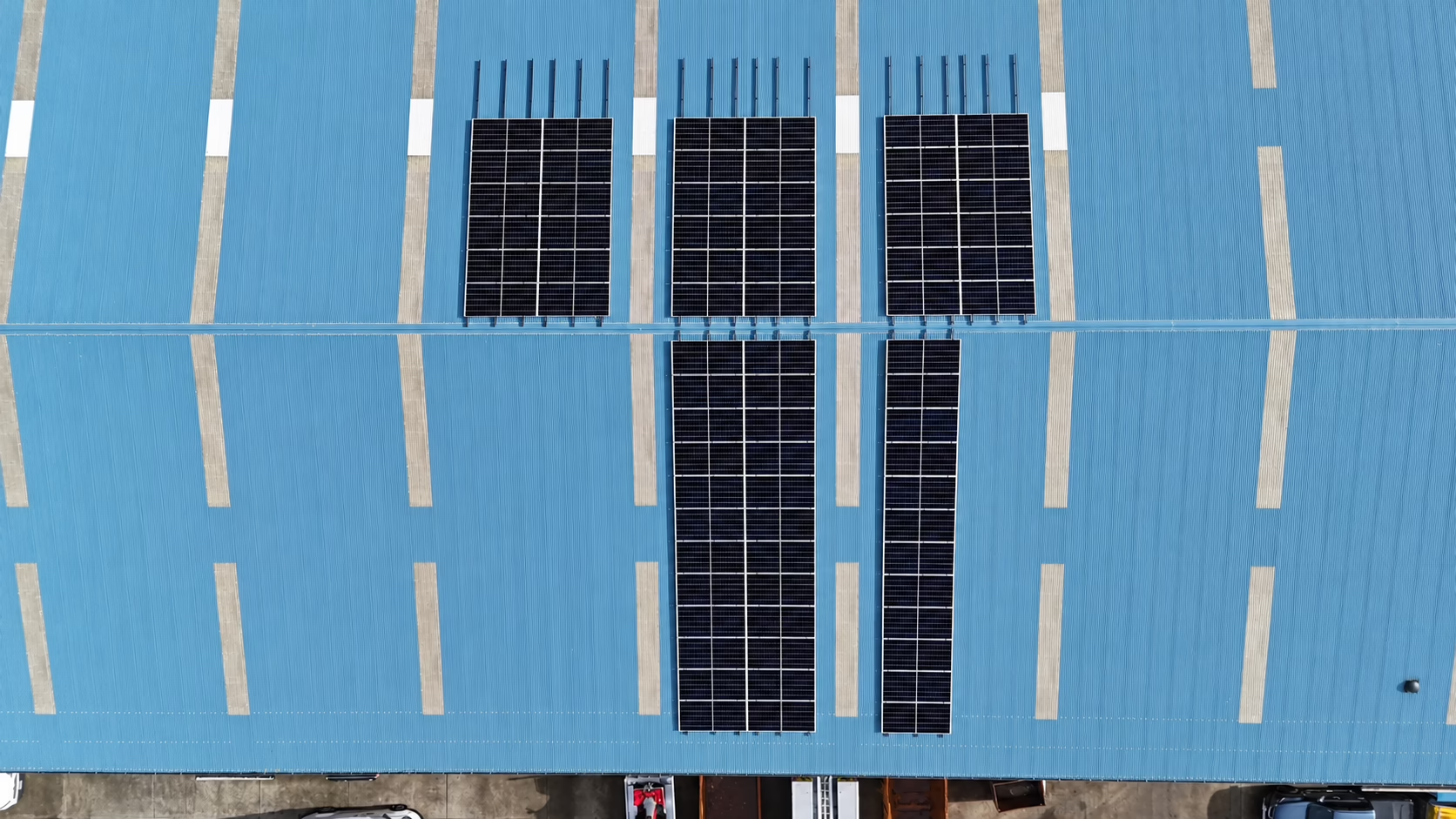

46 kW commercial solar installation · Wellington
Designed for steel fabricator MF King Engineering, this system features 72 × 650 W solar panels and estimated annual generation of 56,000 kWh.
The mounting rails were engineered for Lower Hutt’s windy conditions, with provision for future system expansion as the business’s energy needs grow.
Discuss a project for your business →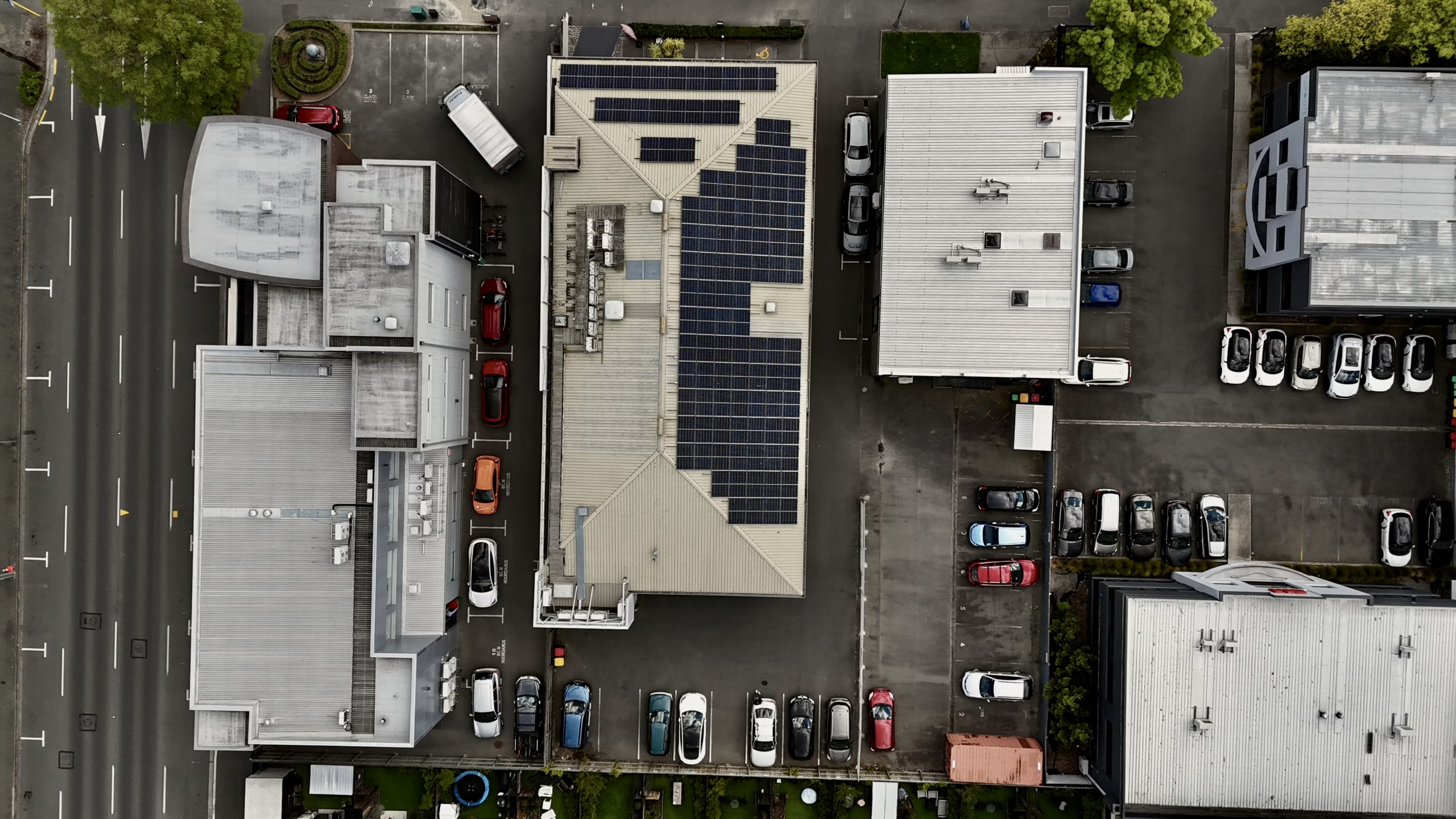
45 kW commercial solar installation · Central Christchurch
Consol installed 108 solar panels paired with Enphase IQ7A microinverters, converting solar power directly on the roof.
The rooftop array is designed to produce an estimated 50,800 kWh (50.8 MWh) of clean electricity each year at the academy’s central Christchurch campus.
Discuss a project for your business →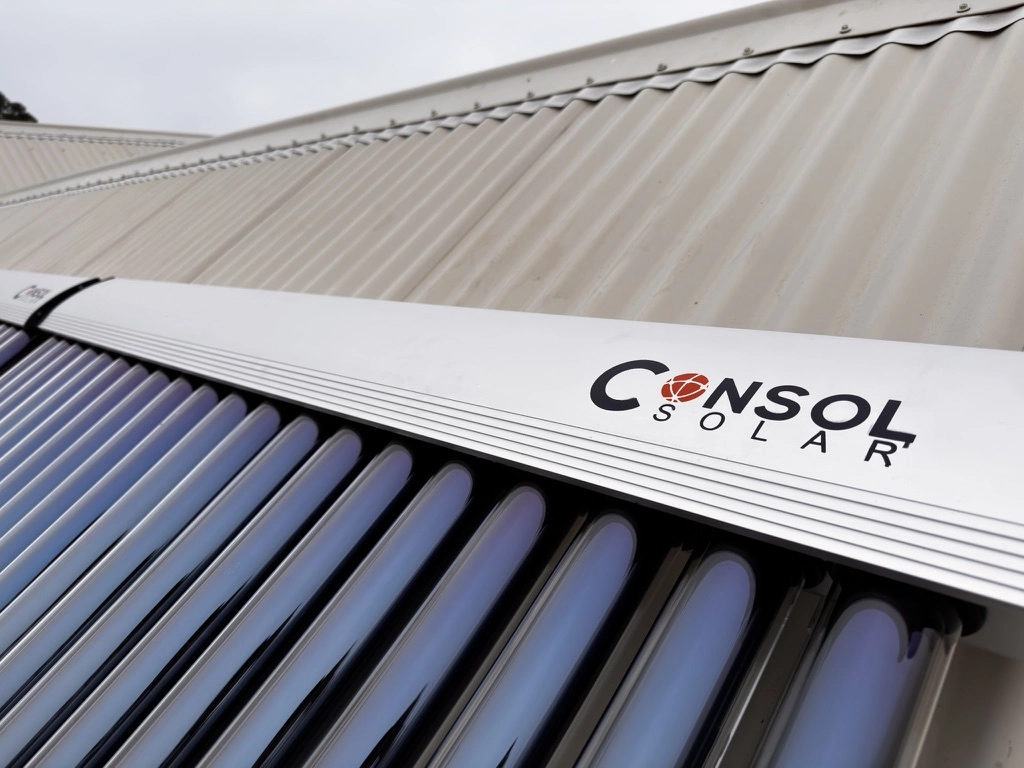

Consol delivered an evacuated tube (ET) solar thermal installation for Christchurch City Council, heating 7,000 litres of water per day.
Solar thermal captures the sun’s energy as heat, offering a different approach from the solar electricity systems featured above.
Discuss commercial solar thermal →
Practical answers to help you take the next step.
Your daytime demand, roof space and grid connection matter more than roof size alone. A year of electricity usage data helps match generation to your operation.
Installation cost, electricity tariffs, on-site consumption and export rates all affect returns. Compare proposals using the same assumptions, including maintenance and equipment replacement.
Not necessarily. Businesses with strong daytime demand can use solar directly. Storage deserves a separate assessment for evening demand or backup needs.
Roof condition, shading, structural capacity and local wind conditions need assessment before a design is finalised.
Have your site address, recent power bills, operating hours and any planned equipment or EV charging changes ready. If available, include 12 months of half-hourly electricity data.
Discuss your site with Consol →Share your location, building type and electricity usage, together with what you want solar to achieve.
Explore roof suitability, system capacity and storage options with the Consol team.
Request a proposal with the recommended scope and pricing. Any estimated generation or savings should be reviewed alongside the assumptions used.
Tell us where you operate and how you use power. We’ll help you explore the next step.